

- Du er her:
- Forside
- Gods og transport
- Stone and gravel
Stone and gravel
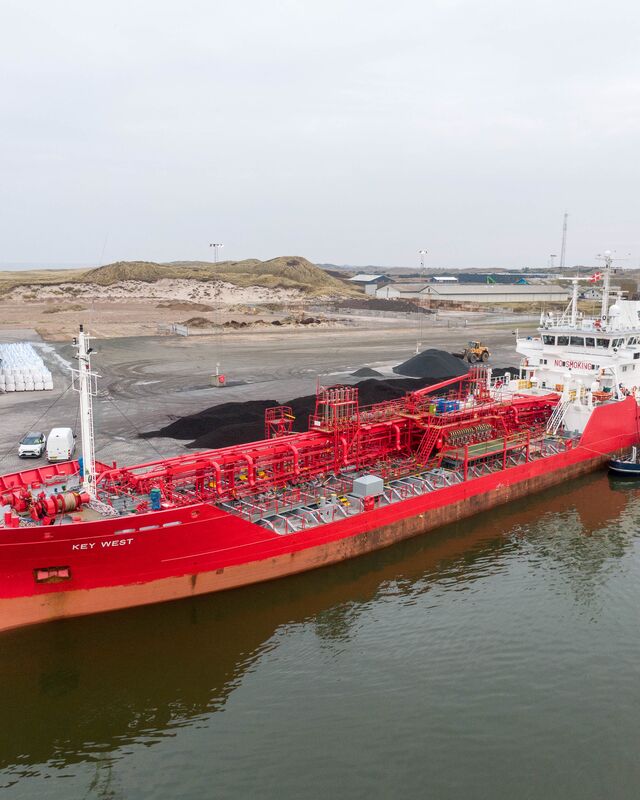
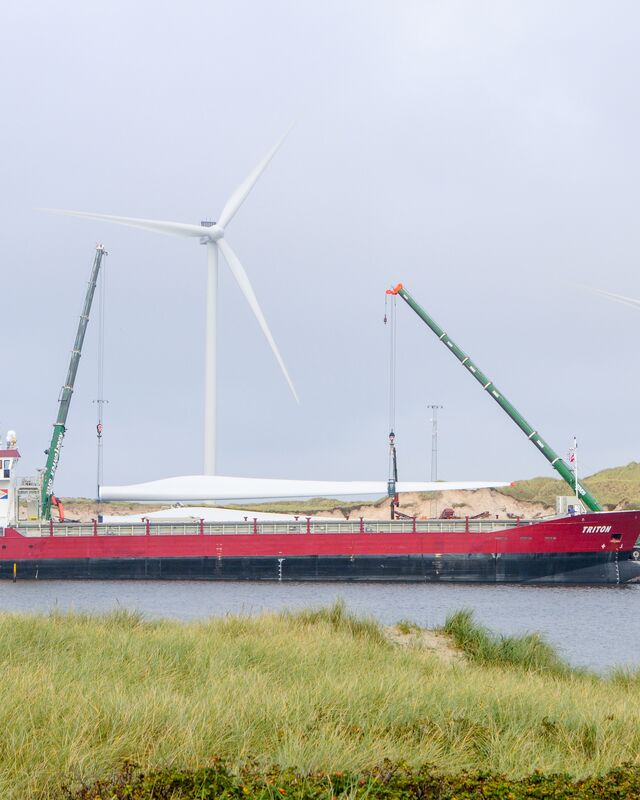
Hvide Sande Harbor is an efficient hub for handling stone, gravel, and related raw materials. With flexible facilities and a strategic location on the west coast, the harbor functions as an important shipping port for, among other things, granite stabilizer from Norway and as a buffer storage for stabilized gravel, which is in increasing demand.
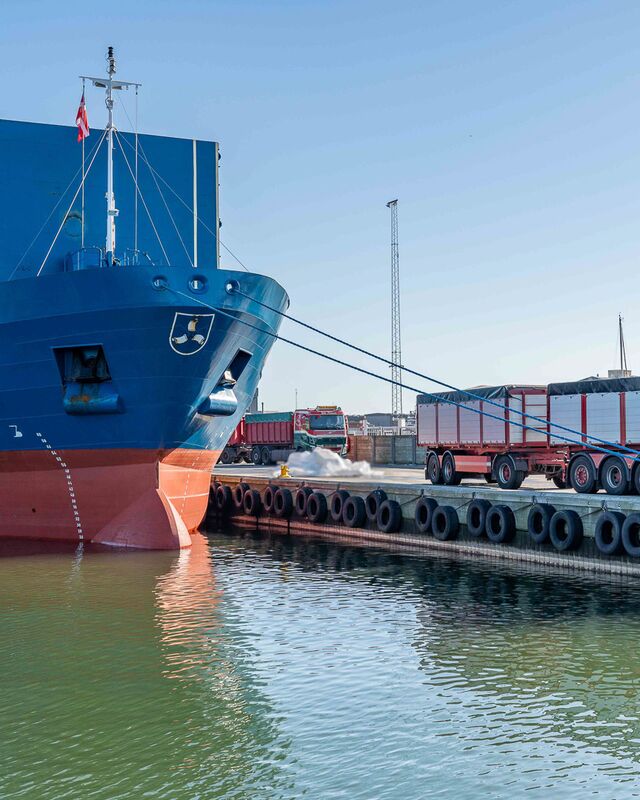
We offer both inbound and outbound shipping of stabilized gravel, sand, and stone flour, with a typical material flow of up to 3,000 tons per shipload. This makes Hvide Sande Harbor ideal for both raw material suppliers, contractors, and public authorities who need quick and efficient access to large quantities of raw materials for construction and infrastructure projects.
Efficient logistics and storage
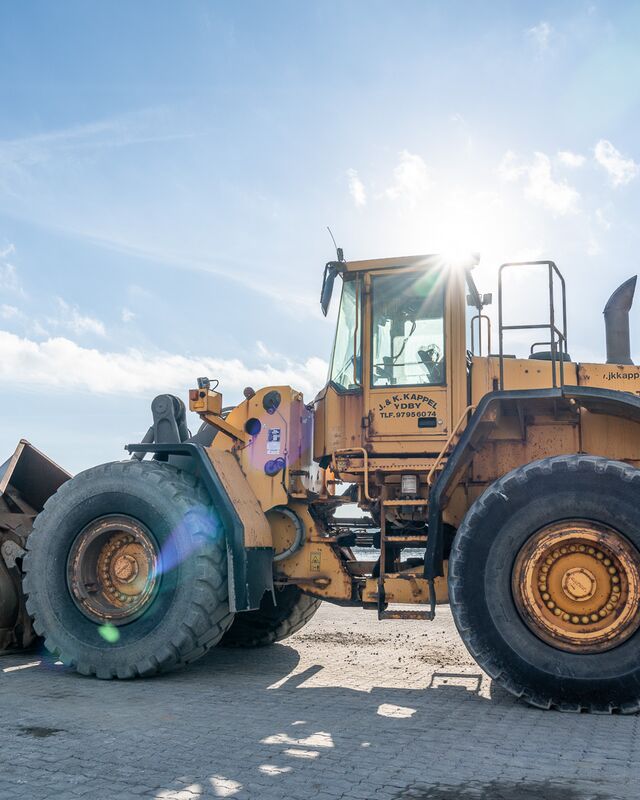
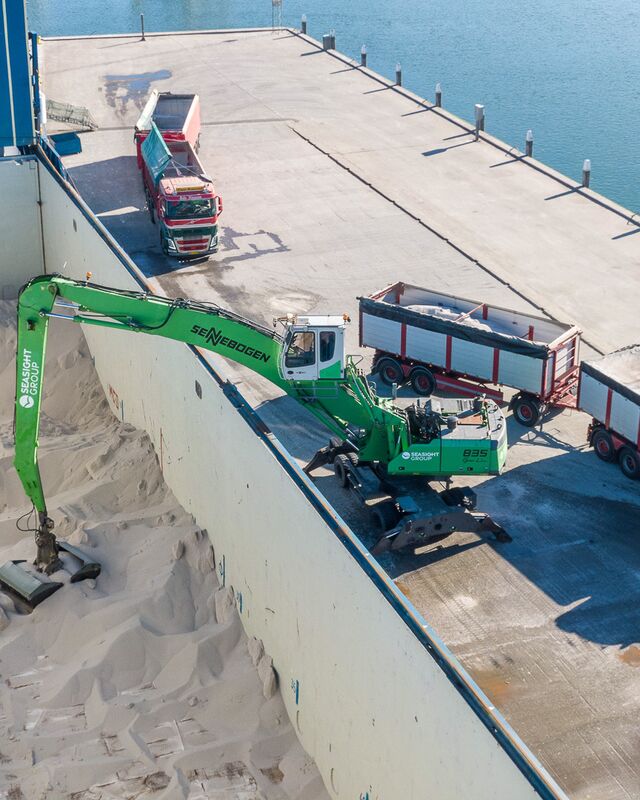
With access to unloading cranes or the use of self-discharging ships, rubber-tired loaders for internal movement, and weighbridges at the West, North, and South Harbor, the logistics surrounding the material flow are both flexible and efficient. We offer both outdoor and covered storage, making it possible to customize storage and handling to various project requirements.
Direct unloading to the quay as well as access around the clock means that truck drivers and transporters can pick up materials precisely when needed – without unnecessary waiting time.
Stone and gravel at Hvide Sande Harbor
- 3,000 tons per shipload
- Shipping port for granite stabilizer from Norway
- Buffer storage for stabilized gravel and granite stabilizer
- 24/7 access for trucks and contractors
- Weighbridges at all harbor sections: West Harbor, North Harbor, and South Harbor
- Outdoor and covered storage
- Direct unloading to the quay
- Rubber-tired loader for internal material movement
- Efficient handling with cranes and self-dischargers
Sand, stone and gravel for Denmark
Our facilities and services are tailored to operators who work with raw material handling and construction projects. Contractors and companies in the construction industry have quick access to large quantities of stabilizing gravel and granite stabil - ideal for road construction, foundations, and larger building tasks.
At the same time, we offer flexible solutions for raw material suppliers and wholesalers who need efficient transshipment and storage close to their customers in Central and Western Jutland.
Our capacity and reliability also make us an obvious choice for municipalities and public builders who need a secure supply of raw materials for infrastructure projects. For transport and logistics companies that value smooth access, round-the-clock operation, and efficient handling of bulk goods to and from the sea - we are the ideal partner.
What is stabil gravel?
Stabil gravel – also called stable gravel – is a gravel product used as a base layer under pavements such as asphalt, tiles, or cobblestones. It is known for its high load-bearing capacity and ability to form a stable and even substrate that does not settle over time.
Stabil gravel consists of a precisely measured mixture of sand and stone with a grain size typically from 0 to 32 mm. It is the distribution of fine and coarse particles that makes the material particularly suitable for compaction – which is crucial for creating a firm and stable substrate.
The material is used in varying thicknesses: about 10-15 cm for terraces and paths and up to 20-30 cm in driveways and road construction, where the load is greater. To ensure quality and durability, stabil gravel is often produced in accordance with the requirements of Danish Standard DS/EN 13285.
Where can gravel be found?
Gravel is found naturally in areas where ice age glaciers have deposited materials. In Denmark, gravel is typically extracted from gravel pits on land and from the seabed.
Where do sand and gravel come from?
Sand and gravel originate from the breakdown of rock formations through natural processes such as erosion and weathering. These materials are transported by water or wind and deposited as sedimentary layers.
What is gravel made of?
Gravel consists of small stones and mineral fragments with a grain size between 2 and 50 mm. It forms through erosion and transport of rock fragments.
What is the difference between gravel and sand?
The difference between gravel and sand lies primarily in the grain size. Sand consists of particles with a diameter of up to 2 mm, while gravel consists of particles between 2 and 50 mm.