
- You are here:
- Homepage
- Offshore Wind
- Service Port
Service port for offshore wind farms in the North Sea
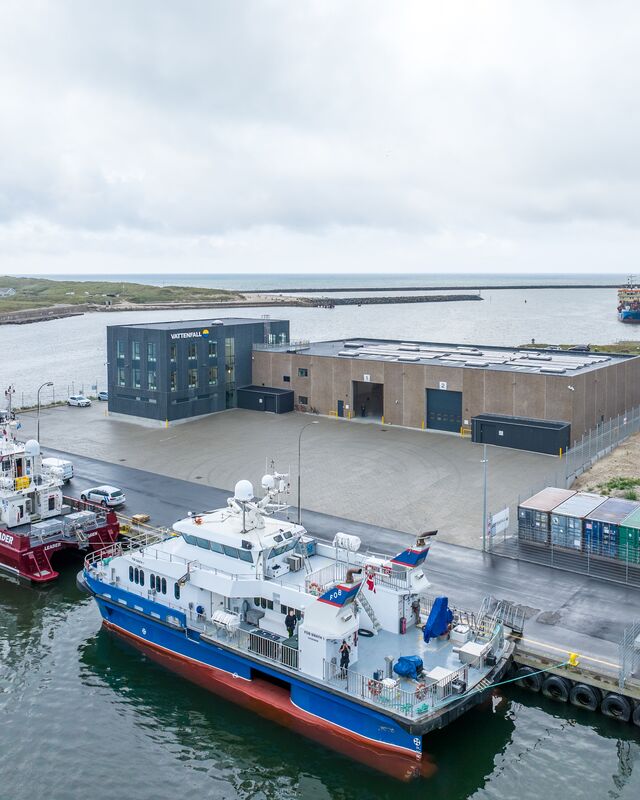
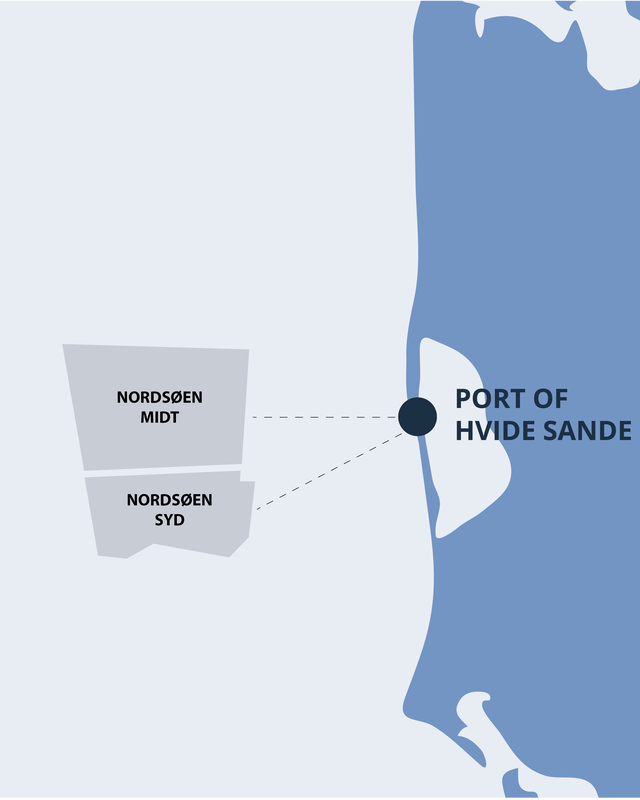
Operation and maintenance of an offshore wind farm requires short sailing distances, flexible quay facilities, and services that can be scaled up and down based on the campaign. As the nearest port to the upcoming offshore wind farms in the North Sea, Hvide Sande Port offers quay space, good water depth for CTVs and SOVs, as well as a comprehensive network of maritime service companies - as part of the port's other offshore activities.
Service port close to the parks
As the nearest port to the upcoming offshore wind farms in the North Sea, Hvide Sande Port is an obvious choice as a service port. The port combines flexible quay facilities and quay space with good water depth for CTVs and SOVs, access to onshore power, bunkering facilities, and an ice-free port year-round.
On and around the port, versatile maritime service companies with offshore experience and shipyards with towing capacity are located. Hvide Sande town also offers a wide range of accommodation options and recreational activities for crew on longer campaigns.
Base for maintenance and service tasks
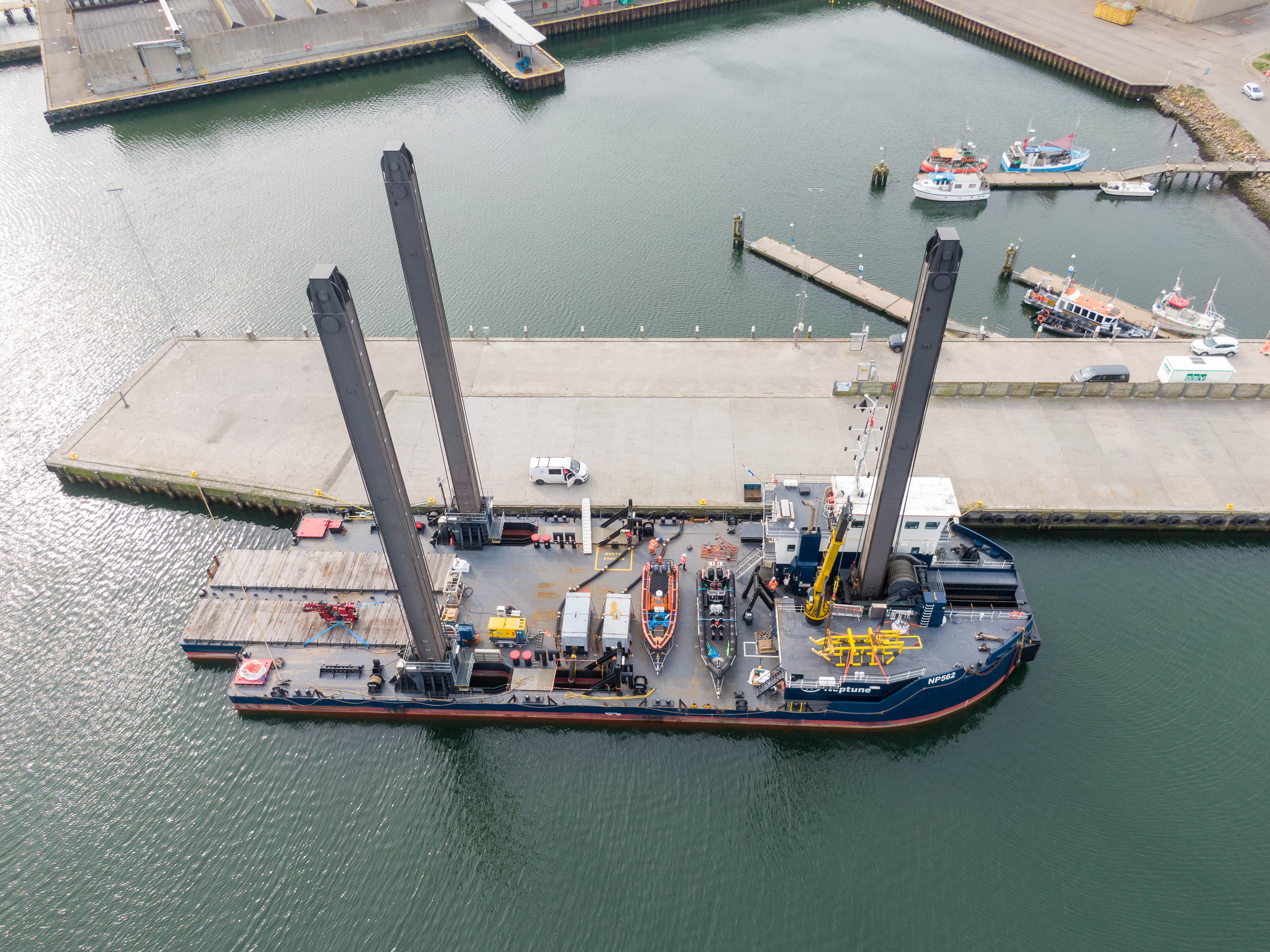
Hvide Sande Port is an ideal base for maintenance campaigns, blade replacements, scour protection, preliminary investigations, and crew changes. The port has continuously available space, quays, office facilities, and both indoor and outdoor storage options.
For service tasks and maintenance campaigns, the port can provide quay space and dedicated quays for both short and longer periods. You only pay for the space and the time you use.
Torben Lindberg Strømgaard
Business Manager / CBO
Areas and load capacity at West Harbor
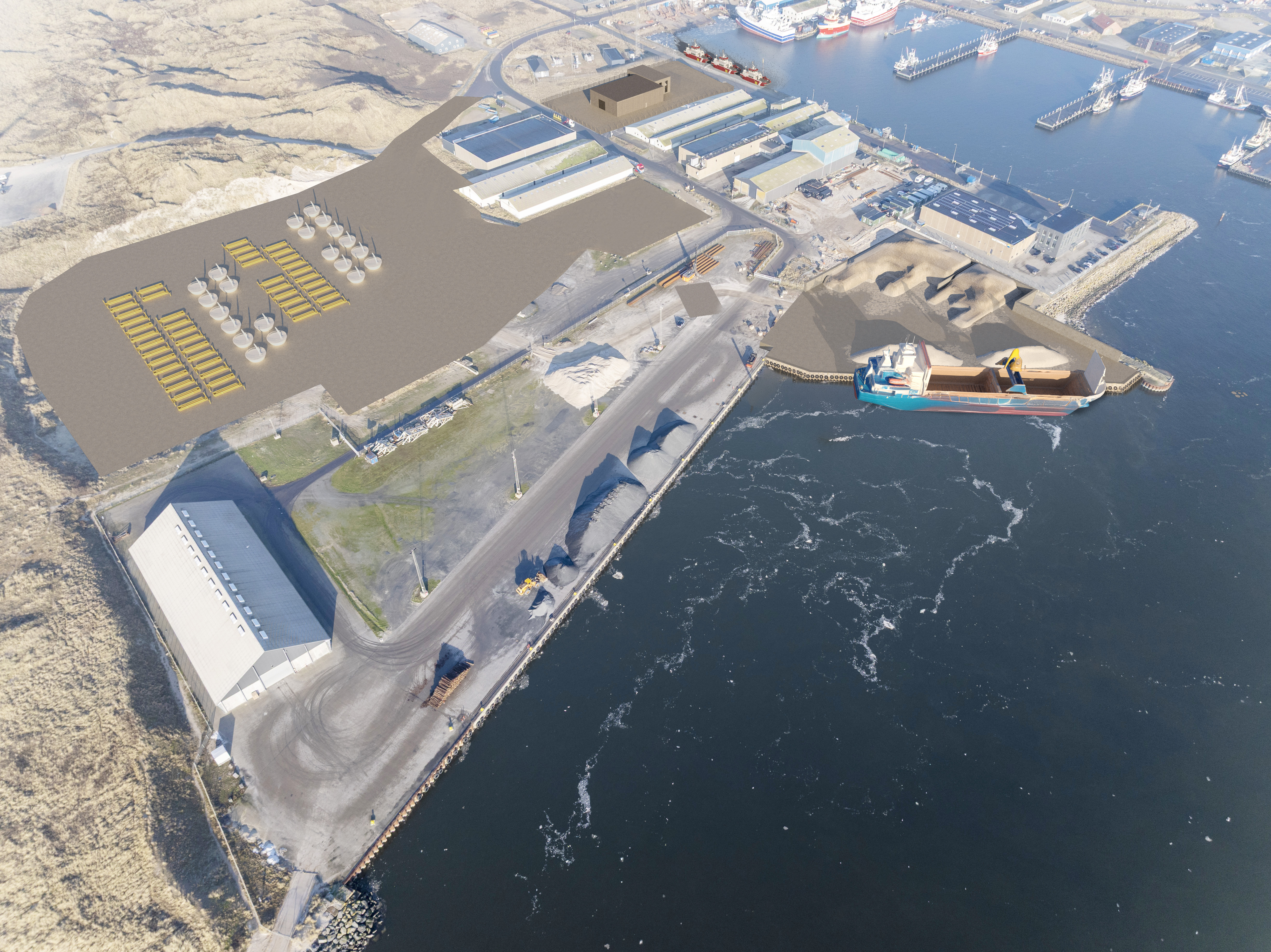
At the West Harbor, the port has over 60,000 m² with high load capacity for heavy components - up to 18 tons per m² in distributed load and up to 50 tons per m² in point load. The quay area has a load capacity of up to 10 tons per m² and a point load of up to 80 tons, making it suitable for heavy crane operations.
The areas can be combined with the port's other areas and storage halls when a project requires additional storage or project offices close to the quay.
Water depth and vessel sizes
The West Harbor currently has a water depth of 7 meters. A final investment decision has been made regarding deepening to 8 meters, which is expected to be carried out by 2027.
The port's standard recommendation is a maximum vessel size of 150 meters in length and 50 meters in width. Larger special vessels are assessed on an ad hoc basis in collaboration between the shipping company, the pilot, and the port's maritime department.
Experience with heavy components and commissioning
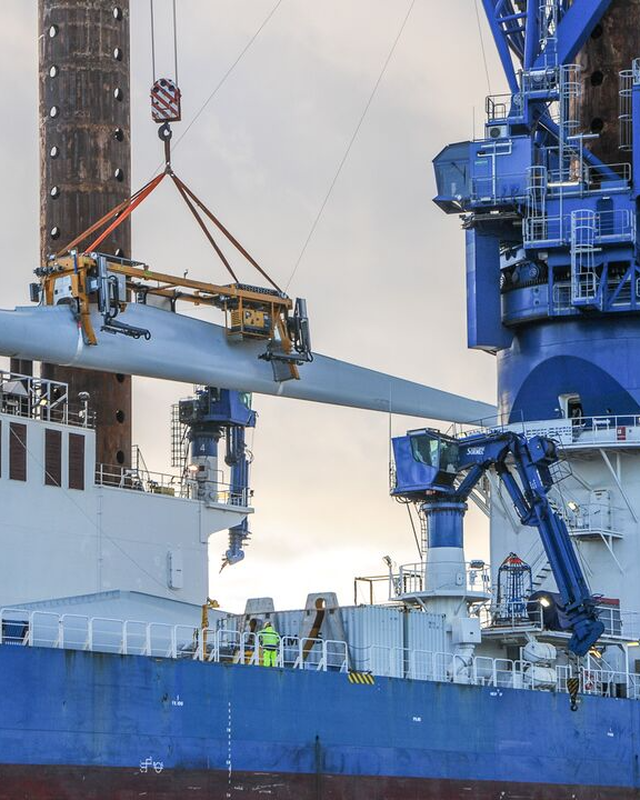
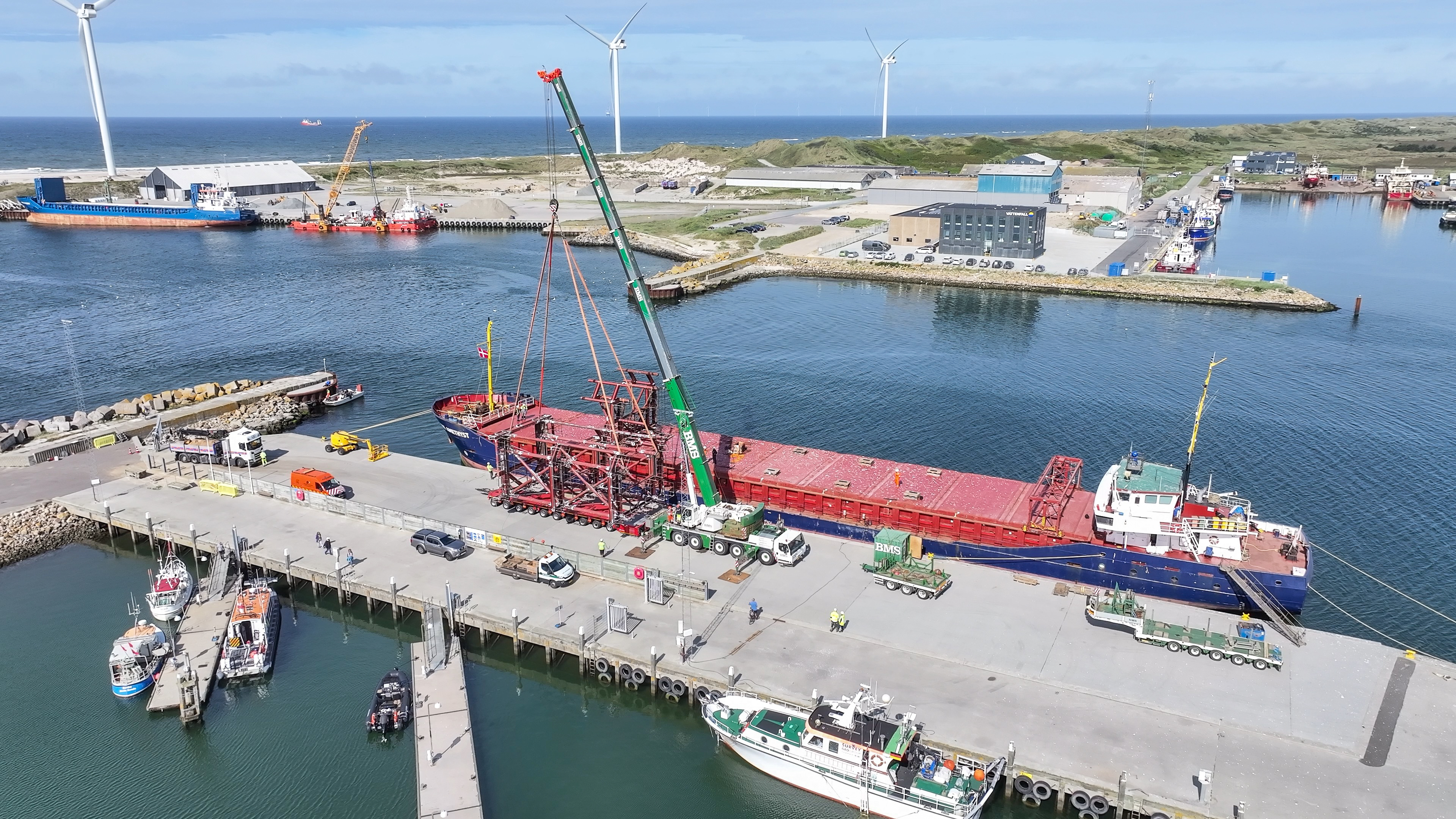
Hvide Sande Port has extensive experience in handling large and heavy items - from transformers weighing 150 tons to blades, nacelles for 15 MW turbines, and steel foundation parts up to Ø11.5 meters.
The port has also served as a commissioning base for several completed offshore wind projects:
- Vesterhav Syd - Siemens Gamesa, commissioning base for the turbines
- Horns Rev 3 - Vestas, commissioning base for the turbines
- Horns Rev 3 - commissioning base for the foundations
FAQ - general questions about service ports for offshore wind
What is a service port in connection with offshore wind?
A service port serves as a base for the operation and maintenance of an offshore wind farm after the farm is operational. From here, crew, spare parts, and equipment sail out to the turbines, and this is where the facilities that support daily operations throughout the lifespan of the farm are located.
What requirements do operation and maintenance impose on a port?
Operation and maintenance require short sailing times to the farm, berth space with good accessibility for CTVs and SOVs, as well as office, crew, and storage facilities close to the quay. Additionally, practical conditions such as shore power, bunkering, and access to local maritime service companies are necessary.
Why does the distance between the port and the farm matter?
Sailing time directly affects operational economics. Shorter distances mean fewer crew hours on the water, lower fuel consumption, less wear on vessels, and more usable working days - an effect that accumulates over an operational period of 25-30 years.
What can a service port offer during a maintenance campaign?
During a campaign, there is typically a need for temporary areas, dedicated berth space, storage, and office facilities for a limited period. Flexible agreements make it possible to adjust the scope to the duration of the campaign, so that payment is only made for the space and time that is actually used.
Torben Lindberg Strømgaard
Business Development Manager, Offshore