

- You are here:
- Homepage
- Offshore Wind
- Construction phase
Construction Phase and Construction in Offshore Wind
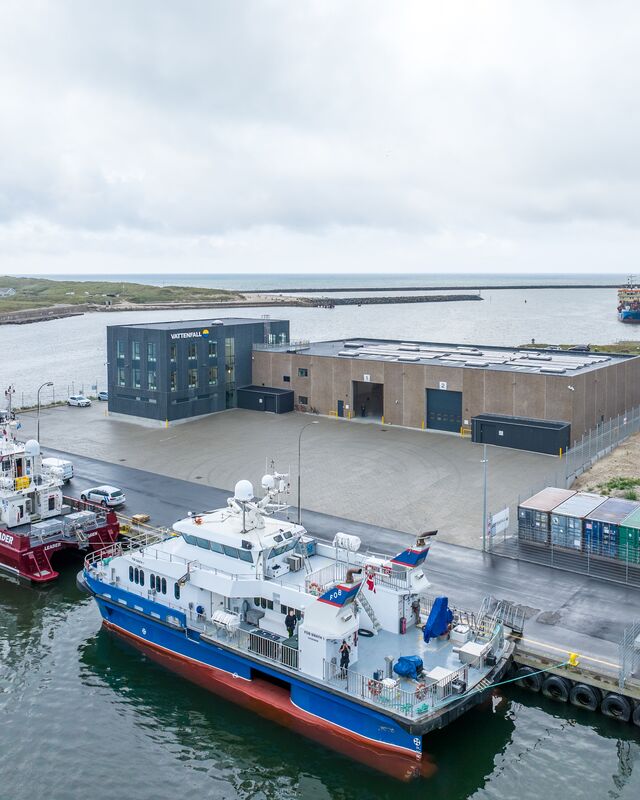
The construction phase of offshore wind farms places high demands on quay facilities, areas, and logistics. Hvide Sande Harbor offers dedicated quay and backland areas with high load capacity, large storage spaces, and flexible facilities that support the assembly, storage, and handling of heavy components as part of the harbor's overall offshore activities.
Construction Phase at Offshore Wind Farms
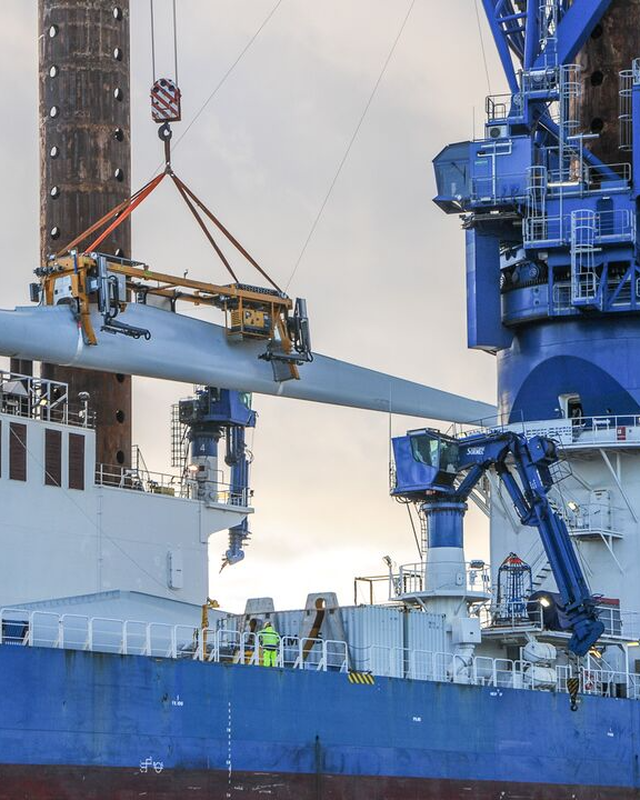
Hvide Sande Harbor can offer dedicated areas and quay facilities for projects in the construction phase of offshore wind farms. The quays in the West Harbor have a load capacity of up to 10 tons per m² and up to 80 tons in point load, making them suitable for handling heavy offshore components, installation equipment, and temporary construction tasks.
In direct connection to the quay areas, the harbor has more than 60,000 m² of storage space prepared for various purposes. The areas have a flat load capacity of up to 18 tons per m² and a point load of up to 50 tons per m² and can be used for temporary storage, preparation, and assembly of materials and equipment in the construction phase.
Areas for Heavy Logistics and Storage
As part of the construction phase, the harbor can offer storage spaces dedicated to bulk storage of stone products. These are typically used in connection with scour protection and other projects where stone and bulk materials are used to protect the seabed around the wind turbine foundations.
This type of activity is closely related to the handling of bulk goods and requires both robust areas, high load capacity, and efficient internal logistics between quay, storage, and shipment.
Torben Lindberg Strømgaard
Business Manager / CBO

Flexible facilities during the construction phase
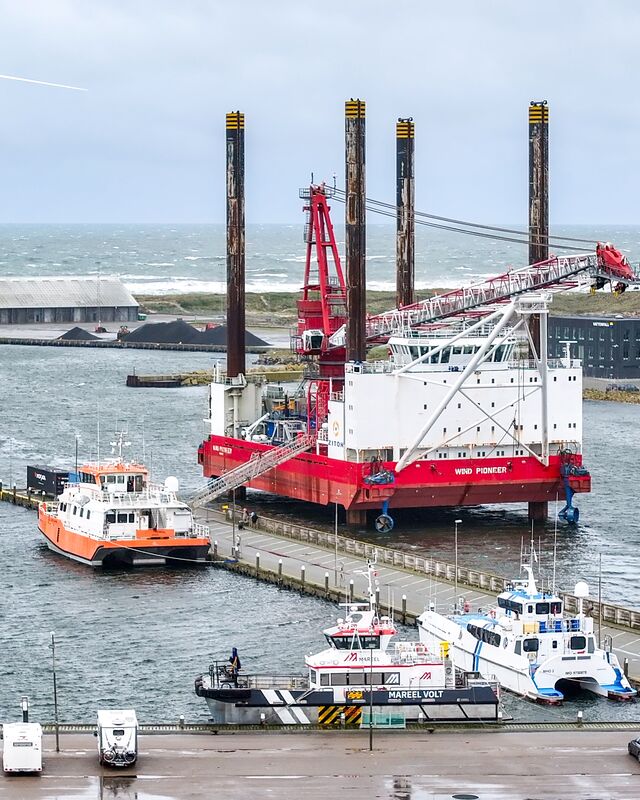
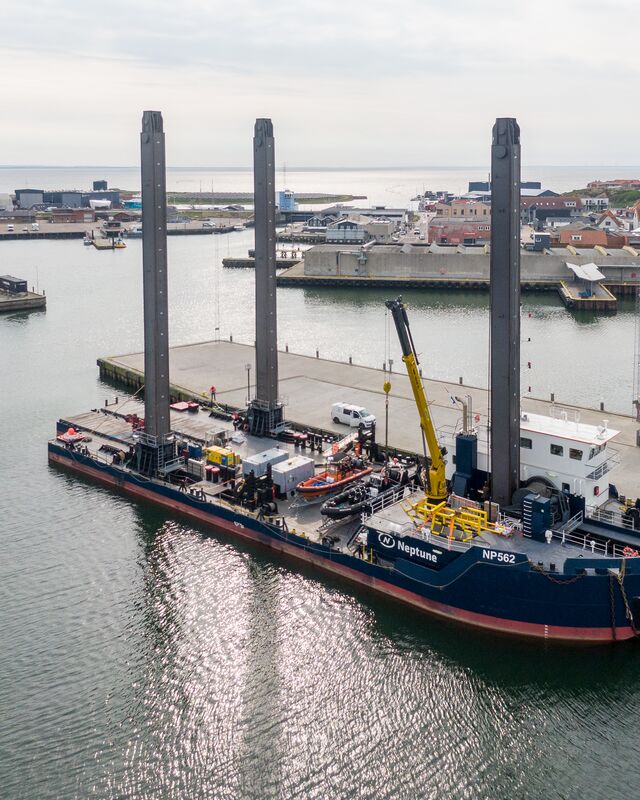
Regardless of whether the construction phase includes scour protection, stone projects, secondary steel for foundations, jack-up barges, cable installation, or support vessels, Hvide Sande Harbor can provide flexible and dedicated areas.
In close proximity to the quay areas, there are existing office, crew, and storage buildings that can be rented directly or adapted to the project's needs. In many cases, these facilities complement the functionality of the port's warehouses, when projects require temporary storage or project offices close to the quay.
Offshore wind projects during the construction phase
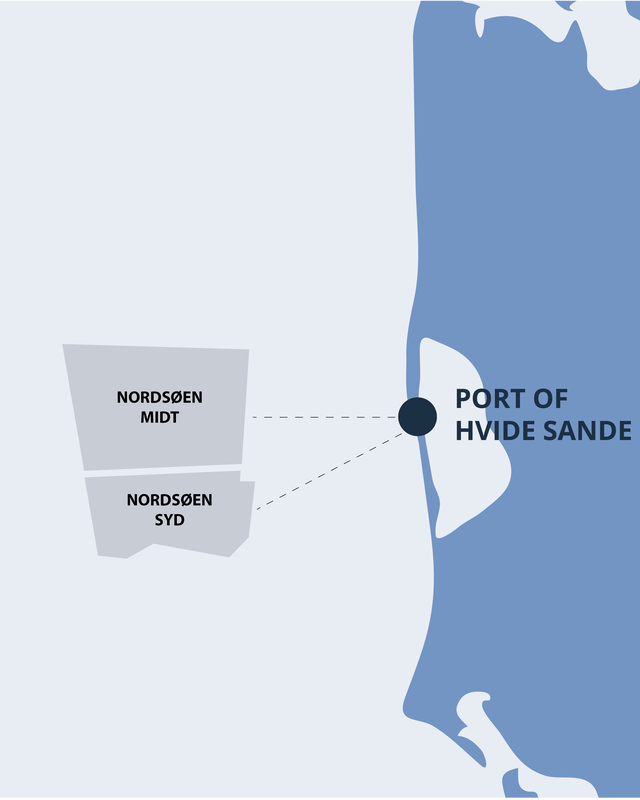
Hvide Sande Harbor has been involved in a number of documented offshore wind farm projects during the construction phase and has served as a base for both commissioning, installation, and support functions for international actors.
- Horns Rev 3 – Vestas
Commissioning base and construction office - Horns Rev 3 – Boskalis
Commissioning base - Vesterhav Syd – Siemens Gamesa
Commissioning base and construction office - Vesterhav Syd – Jack-up vessel
Shore cable installation - Vesterhav Syd
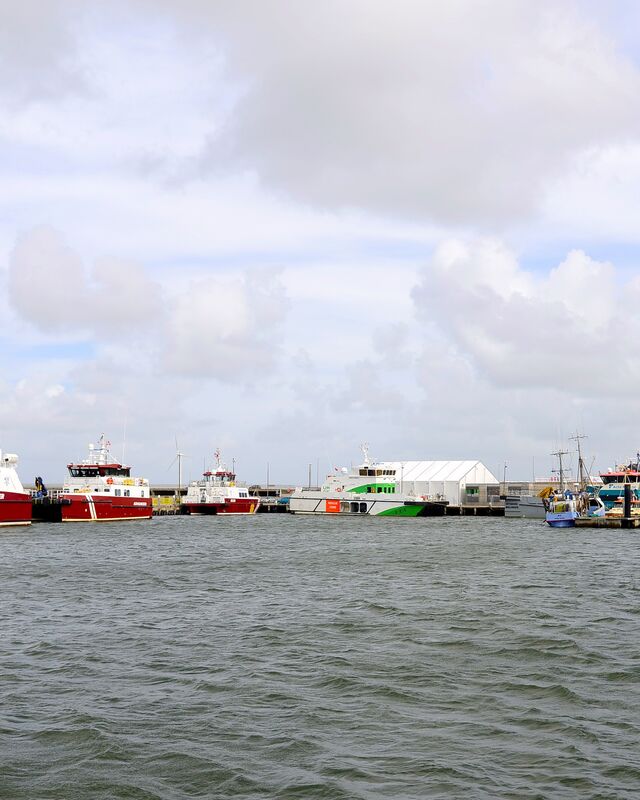
Guard vessels, survey vessels, support vessels, tugboats, and CTVs
The projects illustrate Hvide Sande Harbor's capacity to support complex offshore wind farm projects during the construction phase – from storage and heavy logistics to installation and daily project support.
Torben Lindberg Strømgaard
Business Development Manager, Offshore
FAQ – general questions about the construction phase of offshore wind farms
What does the construction phase of an offshore wind farm include?
The construction phase includes the establishment of foundations, installation of cables, assembly of wind turbines, and handling of materials and equipment onshore and at sea. During this phase, there is typically a need for large areas, high load-bearing capacity, and efficient logistics to ensure stable progress in the project.
What requirements does the construction phase place on a port?
A port in the construction phase must be able to handle heavy lifts, large components, and significant quantities of materials. This requires robust quays, large storage areas, flexible facilities, and the ability to adapt areas and flow to the project's different phases and schedule.
What are storage areas typically used for in the construction phase?
Storage areas are used for temporary storage and preparation of materials such as foundation parts, secondary steel, cables, and stone materials for scour protection before they are installed offshore. The goal is to ensure short internal distances and smooth handling between storage, quay, and shipment.
Why is flexibility important in the construction phase?
The construction phase of offshore wind projects is often characterized by changing needs and adjustments in the schedule. Flexible areas and facilities enable scaling up and down, adapting temporary solutions, and maintaining an efficient flow throughout the entire construction and installation period.